Best Protein Sources: How to Pick and Fit Them Into Real Life
By:Author:Carnimeat Editorial
Updated on:October 17, 2026
- What a Day of Protein-First Eating Looks Like
- How Much Protein You Actually Need per Day
- Why Whole Food Protein Beats Counting Shakes
- Fitting High Protein Meals Into a Busy Week
- Choosing Protein Sources for Different Situations
- When Protein-First Eating Starts to Feel Normal
- Tracking Your Protein Sources With Carnimeat
- Making Your Protein Choices Stick Past This Month
The best protein sources are the ones dense enough that you can hit your target without eating constantly: eggs, beef, poultry, fish and dairy sit at the top because they pack a lot of protein per bite with little wasted volume.
Protein needs come from body weight and activity, not guesswork, so a food's value depends on how much it delivers per serving against how much room it takes up in your stomach.
This guide covers what a realistic day of eating looks like, how much protein you actually need, why simple food choices beat complicated ones, and how to make the habit last past the first fortnight.
What a Day of Protein-First Eating Looks Like
Here's one way to structure a day so protein shows up at every meal instead of getting crammed in at dinner.
A Sample Day
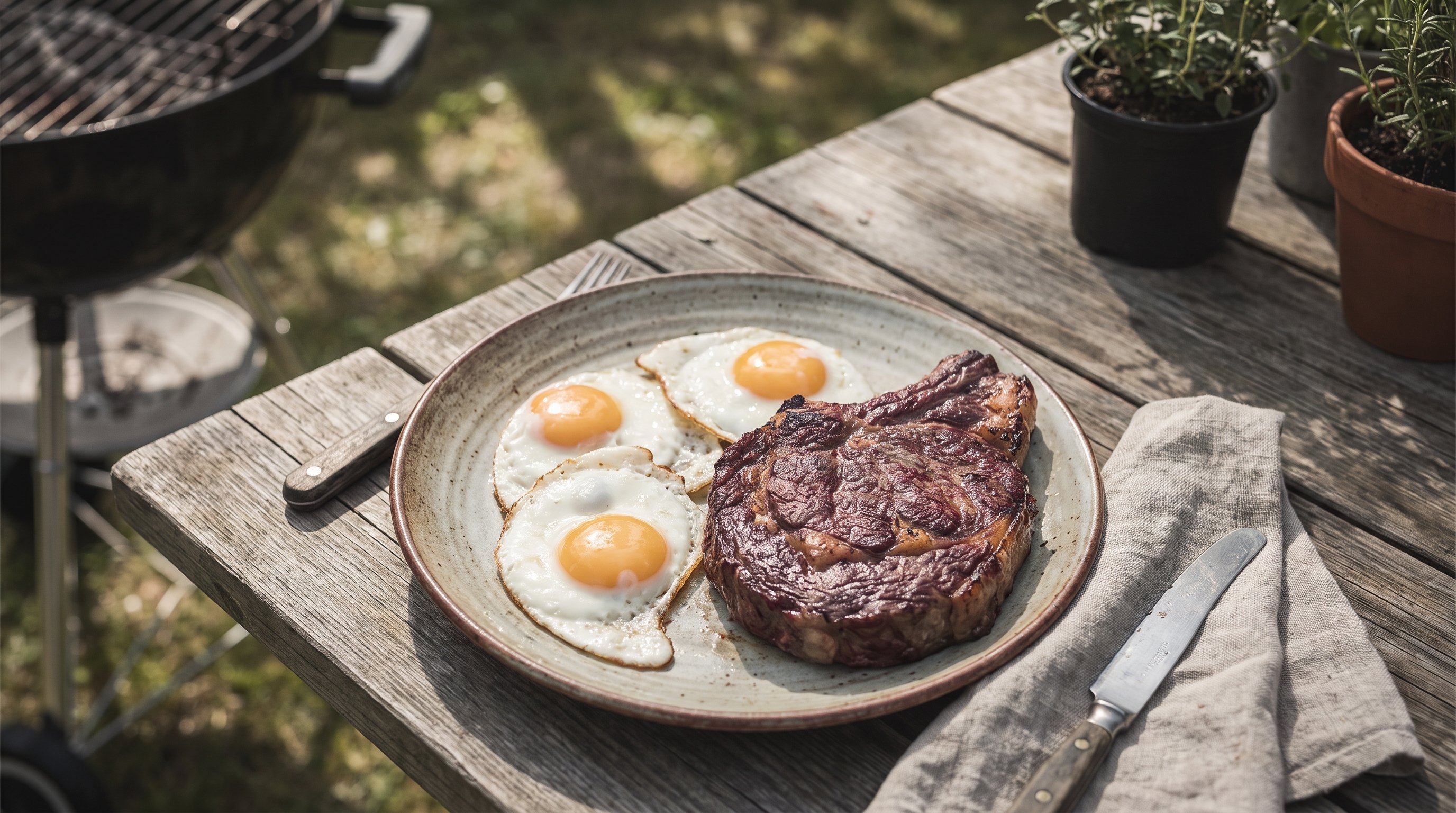
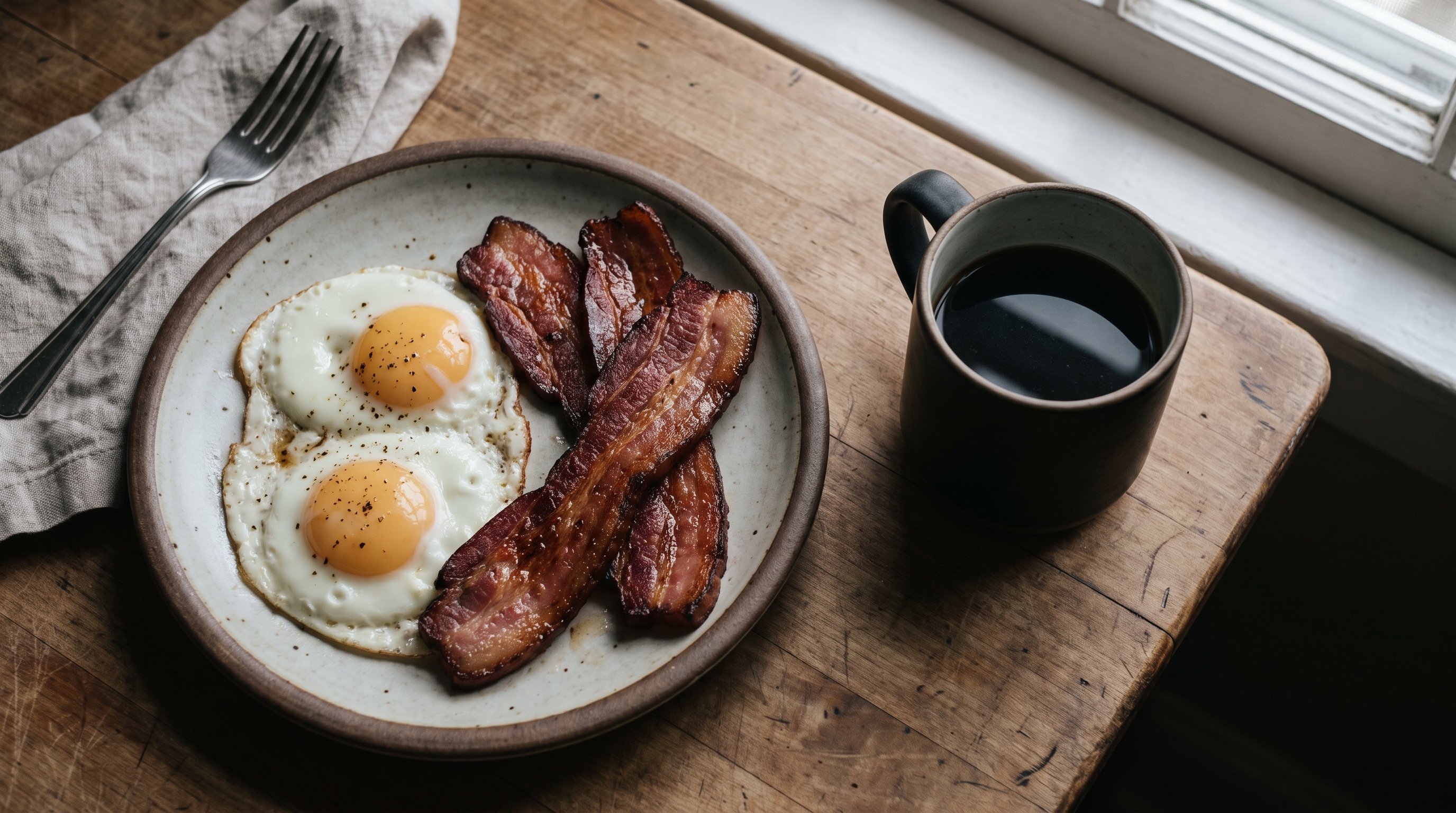
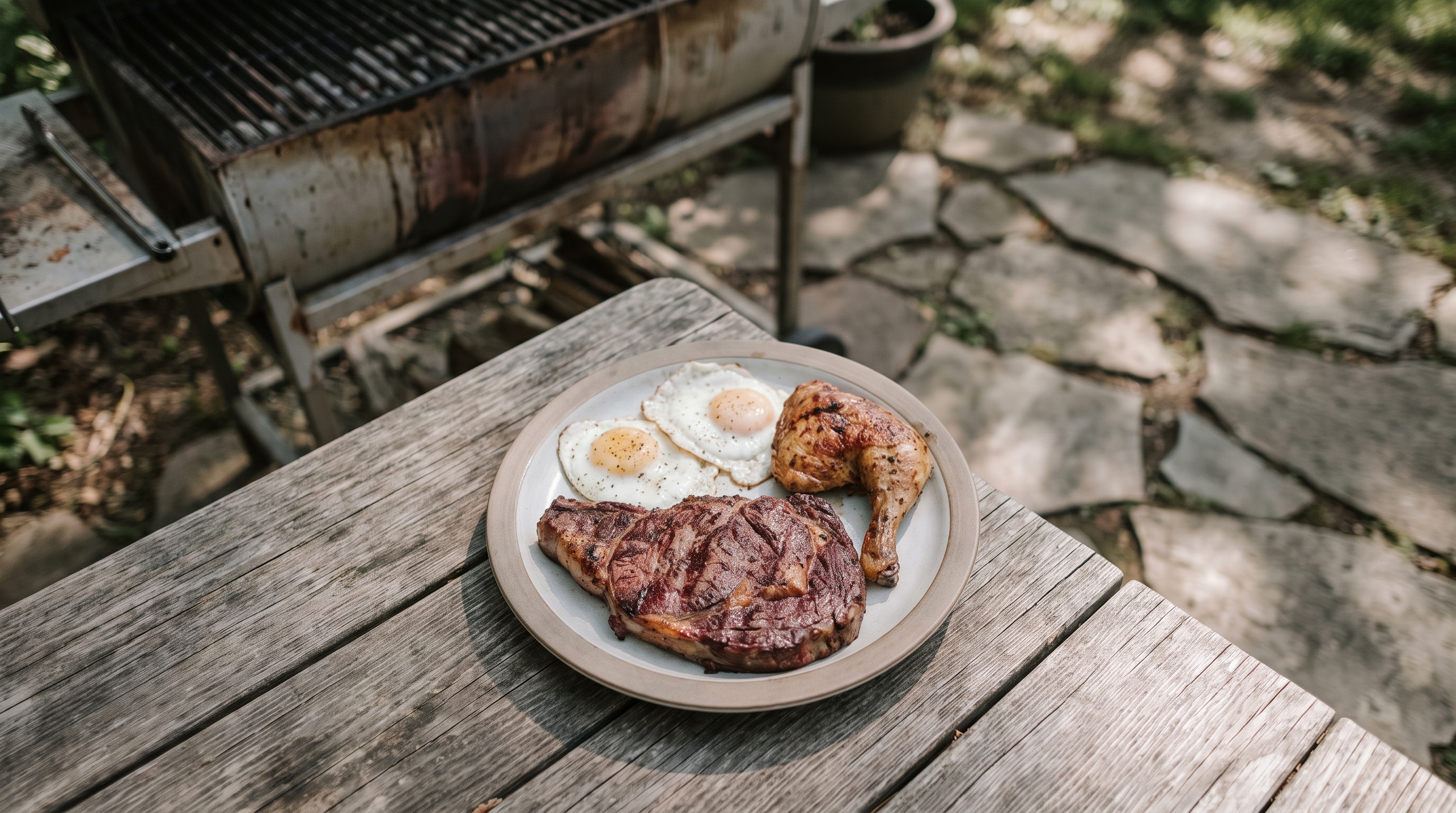
- Breakfast - three eggs with a couple of rashers of bacon
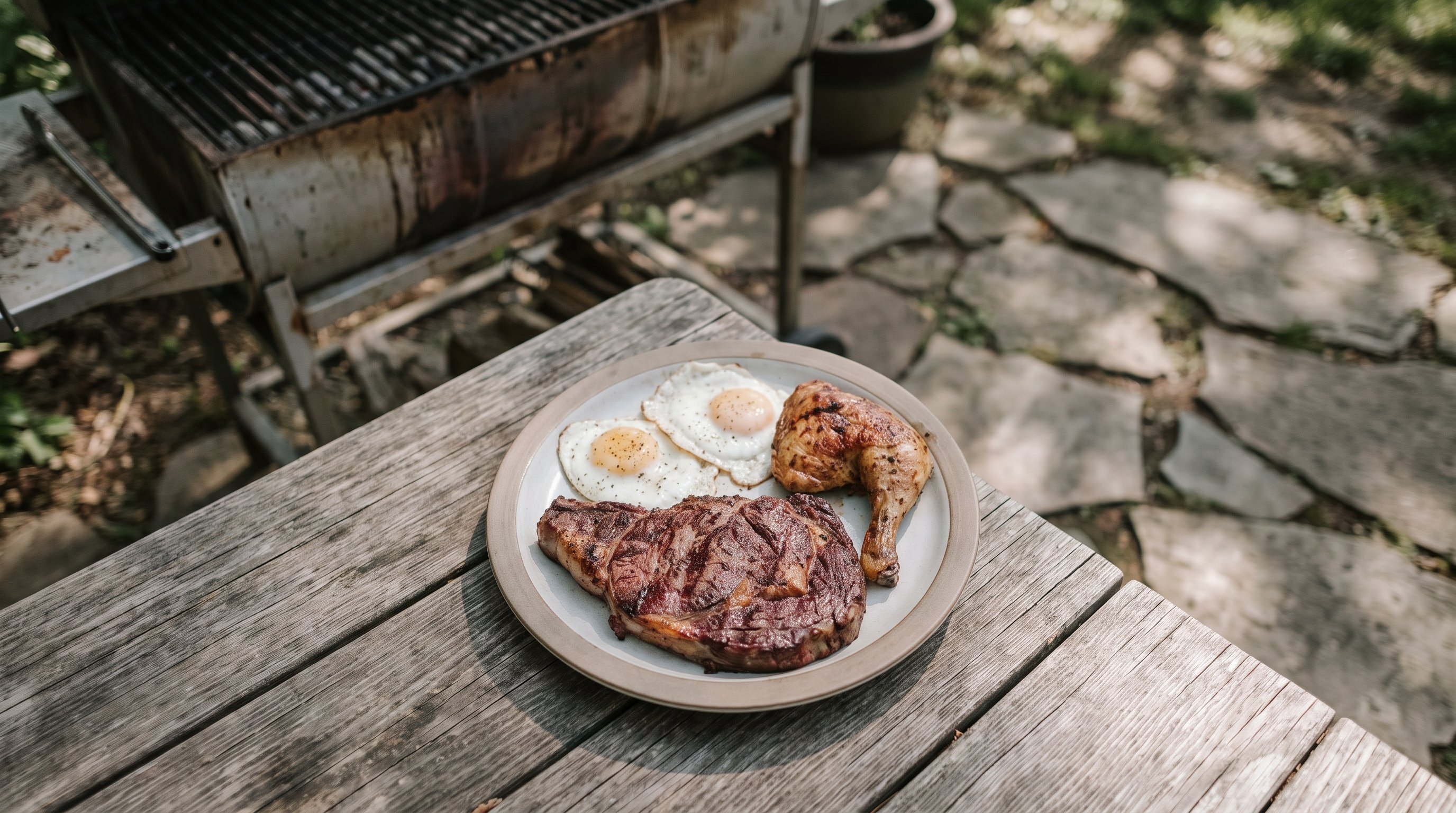
- Lunch - grilled chicken thighs with a side of cheese
- Afternoon - a tin of tuna or a handful of beef jerky
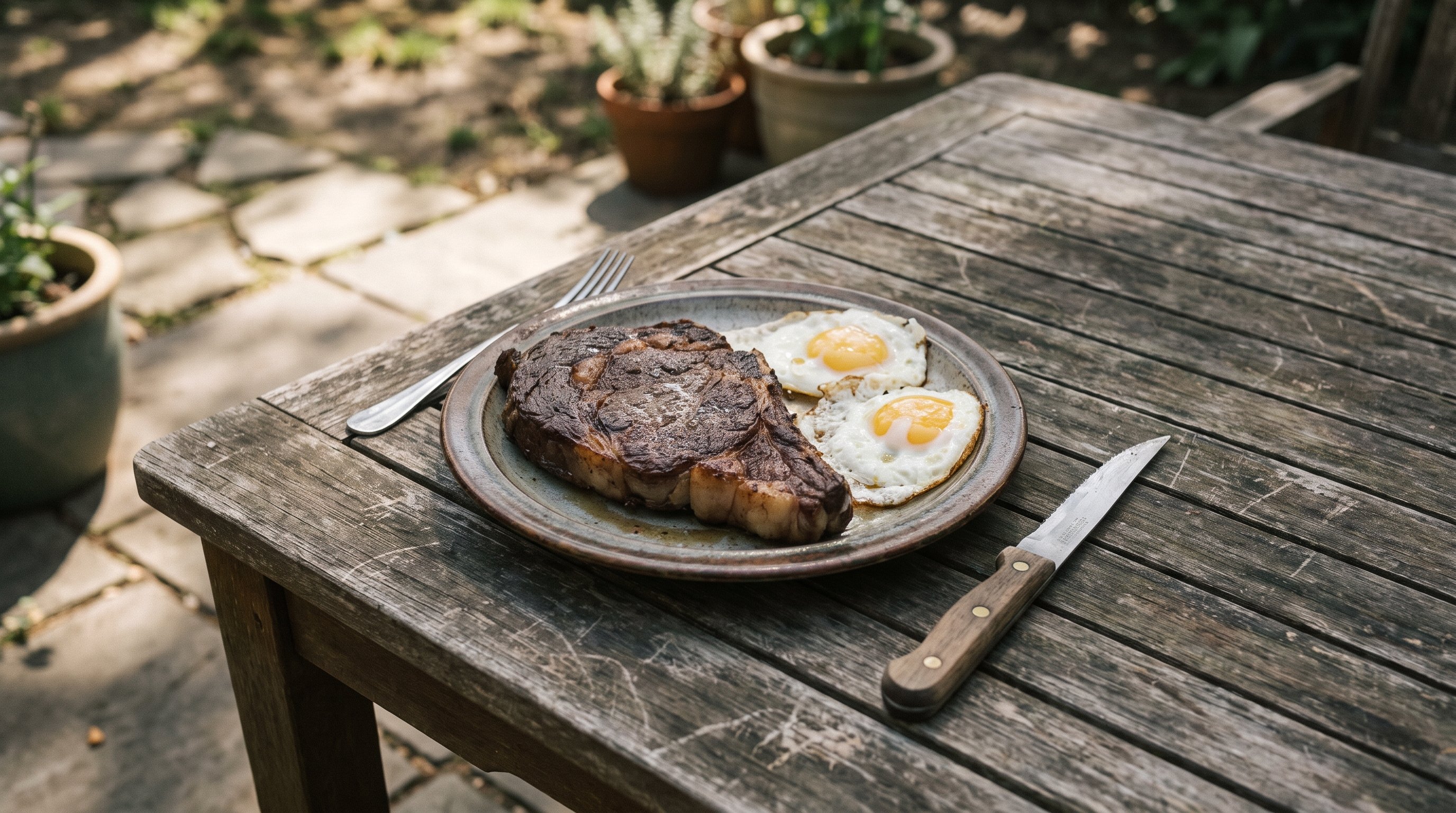
- Dinner - a beef steak with butter, plus a serving of full-fat yoghurt
Spreading protein across four touchpoints like this means no single meal has to be huge, which makes the whole day easier to actually finish.
How Much Protein You Actually Need per Day
Working From Body Weight
A common starting point is building meals around roughly 1.6 to 2.2 grams of protein per kilogram of body weight, then adjusting from there based on appetite and goals.
The table below shows what that range looks like in practice and roughly how many of the foods above it takes to get there.
| Body Weight | Low End (1.6 g/kg) | High End (2.2 g/kg) |
|---|---|---|
| 60 kg | 96 g protein | 132 g protein |
| 70 kg | 112 g protein | 154 g protein |
| 80 kg | 128 g protein | 176 g protein |
| 90 kg | 144 g protein | 198 g protein |
| 100 kg | 160 g protein | 220 g protein |
A 200 gram beef steak carries roughly 50 grams of protein, so someone at 80 kg could cover most of their low-end target with two steak-sized meals plus eggs at breakfast.
Why Whole Food Protein Beats Counting Shakes
The harder route is treating protein like a math problem: weighing powders, stacking shakes, tracking grams across a dozen small servings.
The easier route is building meals around two or three dense whole foods a day, because dense foods close the gap in fewer bites and leave less room for decision fatigue.

Adherence usually comes down to friction, and a plate of meat and eggs has less friction than mixing, measuring and cleaning a shaker bottle three times a day.
That's not a knock on shakes, it's just arithmetic: fewer steps between you and the food means the habit survives a busy week.
Fitting High Protein Meals Into a Busy Week
Most weeks fall apart not because people don't know what to eat, but because nobody planned the Tuesday when the day runs long.
A meal plan built around food you already like removes a lot of that guesswork, because the decision gets made once instead of three times a day.
Carnimeat approaches this with a tailored meal plan alongside a library of over 500 carnivore recipes, so protein-first eating doesn't mean eating the same three dinners on rotation.
Keeping water, weight and progress logged in one place also takes the guesswork out of whether the week actually went to plan or just felt like it did.
Choosing Protein Sources for Different Situations
Just Getting Started
Stick to two or three foods you already cook well, like eggs and chicken, rather than trying every protein source at once.
Short on Time
Lean on foods that need little prep, such as tinned fish, pre-cooked chicken or hard-boiled eggs made in a batch.
Older Adults
Softer proteins like eggs, mince and slow-cooked cuts can be easier to chew and digest than a thick steak, while still delivering a similar amount per serving.
Training Regularly
Spreading protein across more meals in the day, rather than one large dinner, tends to be easier to actually finish when appetite is already stretched thin by training.
When Protein-First Eating Starts to Feel Normal
The first week or two usually feels like extra admin, remembering to buy enough eggs, checking labels, planning the next meal before the last one is finished.
Most people quit somewhere around that point, right before the shopping list and the cooking routine start to run on autopilot.

Be vague about exactly when it clicks because it varies, but the pattern is consistent: once the same five or six foods are on repeat, the decisions disappear and only the eating is left.
Tracking Your Protein Sources With Carnimeat
Picking good protein sources is only half the job, the other half is noticing whether you're actually eating enough of them on an average Tuesday, not just a planned Sunday.
Carnimeat pairs a tailored meal plan with progress tracking for weight, water and fasting, so you can see whether protein-first eating is actually happening or just intended.
The app also includes over 100 workouts and nutrition guides written by nutrition experts, personal trainers and psychologists, which helps when protein choices start overlapping with training goals.
Power Your Body Daily
Build Strength With Food
Making Your Protein Choices Stick Past This Month
Pick three protein sources tonight, put them on a shopping list, and build tomorrow's meals around them before you second-guess the plan.
Carnimeat can take the guesswork out of what goes on the plate next, with a tailored plan and recipes built to keep protein-first eating from feeling repetitive.
FAQ
There isn't one single best food, but eggs are a practical starting point because they're cheap, quick to cook and deliver a solid amount of protein per serving. From there, add beef, chicken or fish depending on what you already enjoy cooking.
For most people, spreading protein across several meals rather than one huge plate makes it easier to manage, not harder. Softer cooking methods and smaller, more frequent servings tend to sit better than one oversized dinner.
Cheaper cuts like mince, chicken thighs and eggs deliver a similar amount of protein per gram as pricier cuts, so the cost barrier is often about which cuts you choose rather than the food group itself. Buying in bulk and batch cooking also spreads the cost over more meals.
Most people drop off when the planning stops, not when motivation runs out, so keeping a simple record of meals and progress matters more than willpower. Carnimeat's tracking tools and recipe library are built to keep that structure going once the first few weeks of novelty wear off.
Share this post