Morning Stretches: A Practical Guide To Waking Up Right
By:Author:Carnimeat Editorial
Updated on:October 17, 2026
- The Myth That Stretching Melts Away Stiffness Forever
- How Morning Stretches Actually Loosen a Stiff Body
- What Changes How Much a Stretch Routine Helps
- A Simple Routine You Can Copy Today
- Fitting Stretching Around Food and Workouts
- When a Stretching Habit Starts to Feel Normal
- Mistakes That Undo a Good Stretching Habit
- Building a Morning Routine With Carnimeat
- Making the First Stretch Happen Tomorrow Morning
Stretching loosens stiff joints and wakes up muscles that have been still for hours, and a short routine of five to ten minutes is enough to make the rest of your morning feel less creaky.
Overnight, your body stays in roughly the same positions for hours, so fluid in the joints settles and muscles shorten slightly. Moving through a few stretches gets blood flowing again and reminds your nervous system that it's time to get moving.
This guide covers what stretching can and can't do, the mechanics behind why it helps, a simple routine you can copy, and where this fits alongside everything else you're doing for your health.
The Myth That Stretching Melts Away Stiffness Forever
A lot of people hope that one good stretch in the morning will fix stiffness for good, or that stretching a specific area will reshape it. Neither is true, and it's worth saying plainly.
Stiffness tends to come back because it's caused by how you move and sit through the day, not by a single missed stretch. Stretching one body part doesn't reshape or slim that area either - the body doesn't choose where to use energy or build tissue based on where you stretch it.
The honest version is this: a morning stretching session provides a short-term reset. It makes the next hour or two more comfortable, and done regularly it can make everyday stiffness less noticeable, but it's not a one-time fix or a shaping tool.
How Morning Stretches Actually Loosen a Stiff Body
Two separate things happen when you stretch in the morning, and understanding both helps explain why the habit is worth five minutes.
Joints Need Movement to Redistribute Fluid
Joints are cushioned by fluid that moves around during the day as you walk, bend and reach. Overnight, that fluid settles, which is part of why joints can feel tight first thing - gentle movement redistributes it and the tightness eases within minutes.
Muscles Warm Up and Lengthen With Gradual Movement
Muscles that have been still for hours are shorter and cooler than they are by midday. A few slow stretches gradually lengthen them and raise blood flow to the area, which is why a stretch held for 20-30 seconds feels different at the end than it did at the start.
Neither mechanism is mysterious or specific to any one body part - it's the same basic process wherever you stretch, which is why a full-body routine works better than fixating on one spot.
What Changes How Much a Stretch Routine Helps
Not every stretch routine delivers the same payoff. Three things matter more than the rest.
What Makes the Biggest Difference
- Consistency over intensity - stretching gently every morning beats one long, forceful session once a week.
- Covering the whole body, not one spot - neck, shoulders, hips and legs all stiffen overnight, so a routine that skips most of them leaves most of the stiffness in place.
- Timing it right after waking - stretching within the first 20-30 minutes of getting up targets the exact stiffness that built up overnight, rather than stretching hours later when the body has already loosened up on its own.
Get those three right and a short routine does more than a longer one done inconsistently or aimed at just one area.
A Simple Routine You Can Copy Today
Here's a routine that covers the main areas that stiffen overnight, in an order that moves from gentle to more active.
A Five-To-Ten-Minute Sequence
- Neck rolls - slow circles each direction, 30 seconds total, to ease stiffness from the pillow position.
- Shoulder rolls and arm reaches - roll shoulders back ten times, then reach both arms overhead for 20 seconds.
- Standing side bend - reach one arm overhead and lean sideways, 20 seconds per side, to open the ribs and lower back.
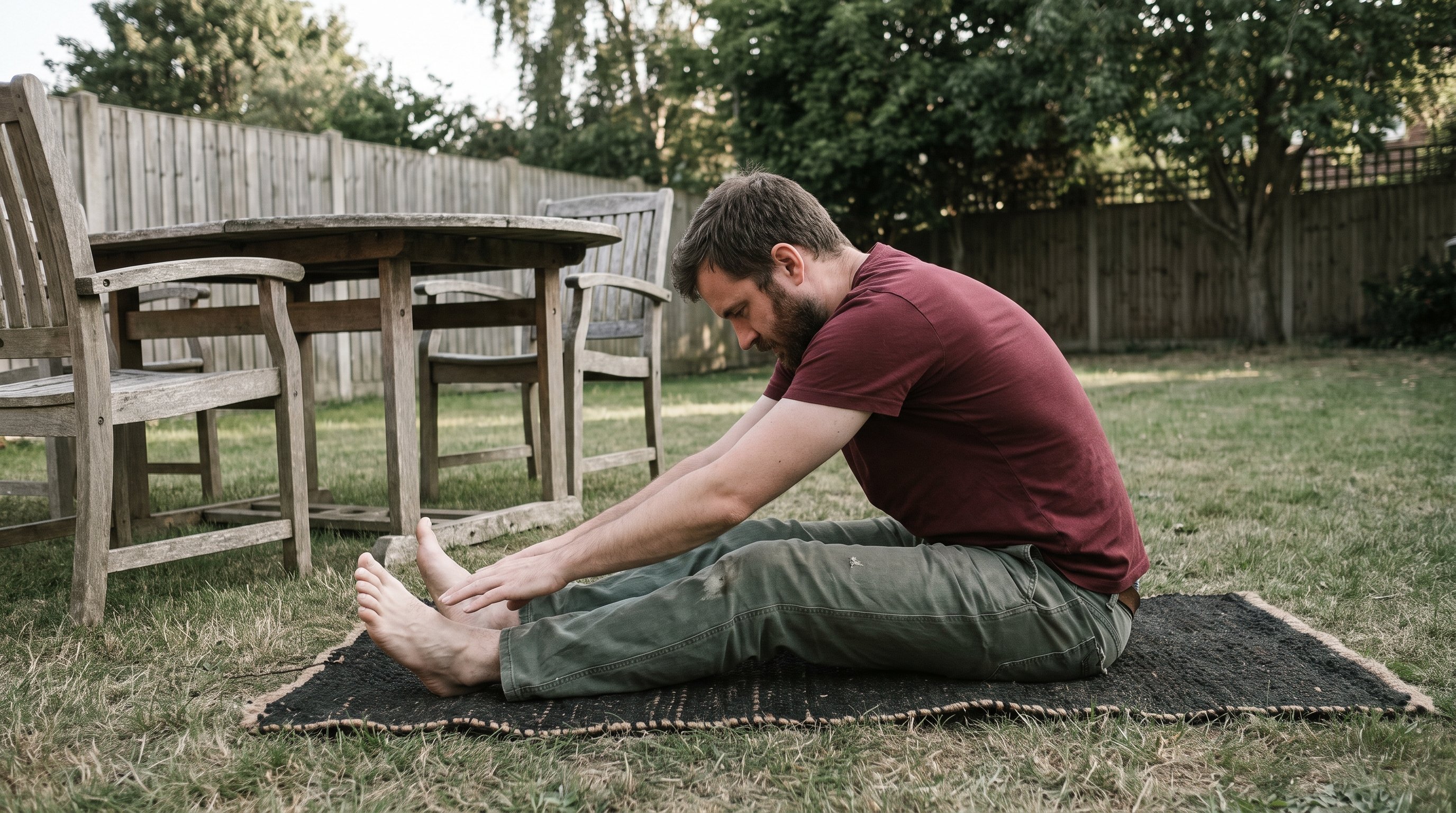
- Forward fold - hinge at the hips and let the arms hang, 20-30 seconds, to release the hamstrings and lower back.
- Hip circles and a few bodyweight squats - loosen the hips and get blood moving into the legs before you start the day.
That whole sequence takes well under ten minutes and doesn't need any equipment, a mat, or much space.
Fitting Stretching Around Food and Workouts
Stretching works best as one piece of a wider morning habit, not a routine that stands alone. Pairing the stretch sequence with a consistent breakfast and a short walk or workout gives the body a clear, repeatable start to the day.
This is where a tailored meal plan and a library of over 100 workouts and exercises come in useful, since stretching sets the body up to move but doesn't replace actual training or what's on the plate. Carnimeat keeps the stretch, the meal and the workout side of the morning in one place, so none of it depends on remembering what you did yesterday.
Tracking steps, water and weight alongside this habit also makes it easier to notice whether the whole routine is actually sticking, not just the stretching part.
When a Stretching Habit Starts to Feel Normal
The first few mornings of stretching can feel like one more task on a list that's already full. That's the point where most people either drop it or push through to where it becomes automatic.
There's no fixed point where stiffness disappears, and it would be dishonest to promise one. What tends to happen is that the routine itself gets shorter to remember and easier to start, since it stops being a decision and becomes something you just do while the kettle boils.
Expect the habit to feel more natural with repetition rather than expecting the stiffness itself to vanish on a schedule.
Mistakes That Undo a Good Stretching Habit
Stretching Cold and Forcing the Range
Pushing into a deep stretch before the body has warmed up slightly can feel uncomfortable rather than useful. Start gentle and let the range increase over the first minute or two instead of forcing it straightaway.
Only Stretching the Areas That Already Feel Loose
It's tempting to repeat the stretches that feel good and skip the ones that feel stiff and awkward. The stiff areas are usually the ones that need the movement most, so they're worth including even when they're less comfortable.

Treating It As Optional on Busy Days
Skipping the routine on the one morning there's no time is exactly how the habit falls away for good. A two-minute version covering the neck, shoulders and hips beats skipping it entirely.
Expecting Stretching to Replace Actual Training
Stretching loosens the body but it doesn't build strength or change body composition on its own. It works alongside workouts and food, not instead of them.
Building a Morning Routine With Carnimeat
A stretching habit sticks better when it's part of a morning that already has some structure, rather than a stray five minutes you have to remember on your own. Carnimeat brings guided workouts, a tailored meal plan and progress tracking into one place, so stretching slots into a morning that already has a shape.
Nutrition and health guides inside the app also cover movement and lifestyle habits beyond just the plate, which is useful groundwork if stretching is the first new habit you're adding. None of it needs to happen all at once - starting with the stretch routine and layering in the rest over time works just as well.
Power Your Body Daily
Build Strength With Food
Making the First Stretch Happen Tomorrow Morning
The easiest way to start is to pick one trigger, like getting out of bed or the kettle switching on, and attach the sequence to it. Doing the same five movements in the same order each morning removes the need to think about what comes next.
Carnimeat can hold the rest of the morning routine around that habit, from the meal plan to a short guided workout, so stretching has somewhere to sit rather than standing alone.
FAQ
Stretching loosens muscles and joints but it doesn't burn enough energy on its own to drive meaningful weight change. It's worth doing for comfort and mobility, while weight management comes down to food and overall activity across the day.
A short routine done every morning tends to beat a longer one done occasionally, because the body responds to the repetition rather than the length of a single session. Five to ten minutes covering the main joints is enough to notice a change in how the next hour feels.
A two-minute version focused on the neck, shoulders and hips still covers the areas that stiffen most overnight. It's better to do a shortened routine than skip it, since skipping tends to turn into a habit of its own.
Stretching doesn't change what you eat, but pairing it with a consistent meal plan and tracking gives the whole morning a repeatable shape. Carnimeat keeps the meal plan, workouts and tracking together, which makes it easier to keep a stretching habit going alongside everything else.
Share this post